
Trump Mulls Future of Taiwan Arms Sales Following Beijing Summit
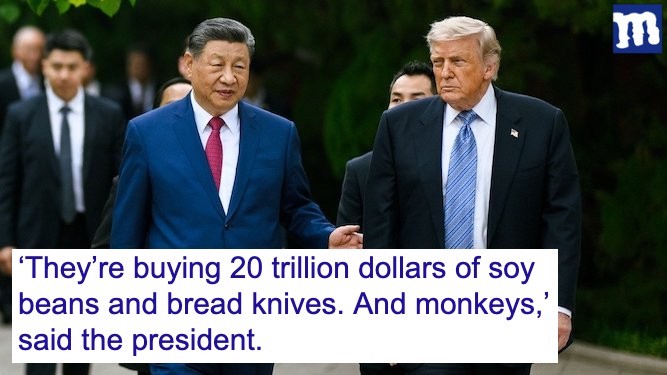
WASHINGTON — President Donald Trump returned from a high-stakes, three-day visit to Beijing on May 15, leaving behind a flurry of speculation regarding the future of U.S. policy toward Taiwan. While the president maintained a notably restrained public posture during his time in China, his comments aboard Air Force One signaled that a critical shift in U.S. defense commitments to Taipei may be on the table.
During the summit, Chinese President Xi Jinping delivered a direct warning, framing Taiwan as the central flashpoint in bilateral relations. Xi cautioned that any move by the U.S. to mishandle the issue could lead to, in the words of a Chinese official, the possibility of a direct clash and open conflict. While Trump remained largely silent on the matter while on the ground in Beijing, his tone shifted once he was in the air.
The administration has previously authorized an $11 billion weapons package for Taiwan, alongside a further $14 billion in pending sales that remain stalled until Trump formally submits them to Congress.
Addressing reporters aboard the aircraft, Trump admitted that his discussions with the Chinese leader had caused him to reconsider his stance on these shipments. “President Xi and I talked a lot about Taiwan,” Trump said, appearing to struggle as he searched for the name of Taiwanese President Lai Ching-te. He added that the Chinese leader “does not want to see a fight for independence because that would be a very strong confrontation.”
“I heard him out. I didn’t make a comment.”
— Donald Trump, President of the United States
The president underscored a growing reluctance to engage in regional conflicts, noting that “The last thing we need right now is a war that’s 9,500 miles away.” This sentiment underscores a broader strategy that shifted the summit’s focus away from the war in Iran—which many expected to dominate the agenda—toward the future of the U.S.-China framework.
Trump’s visit to China was marked by symbolic gestures, including a rare meal hosted at Zhongnanhai, which Beijing historically reserves for leaders with whom it pursues closer political intimacy.
Despite the lack of public friction, the lack of concrete deliverables has left foreign-policy analysts questioning the ultimate efficacy of the trip. While Chinese officials have touted the summit as a move toward a more stable, constructive vision for the two economic superpowers, U.S. defense hawks are expressing deep concern over the president’s potential hesitation to push forward with pre-approved arms support for Taipei.
The summit ultimately served more as a stage for high-level pageantry than a venue for immediate policy breakthroughs, with both nations signaling a desire to stabilize ties amid ongoing trade and security disputes.
For now, American agriculture and business sectors remain optimistic that the trip may yield benefits for farmers and corporations, though the long-term impact on regional stability—particularly concerning Taiwan—remains the focus for federal lawmakers as they await official word on the pending defense packages.


