
Border Wall Construction Sparks Outcry Over Desecration of Indigenous Sacred Sites
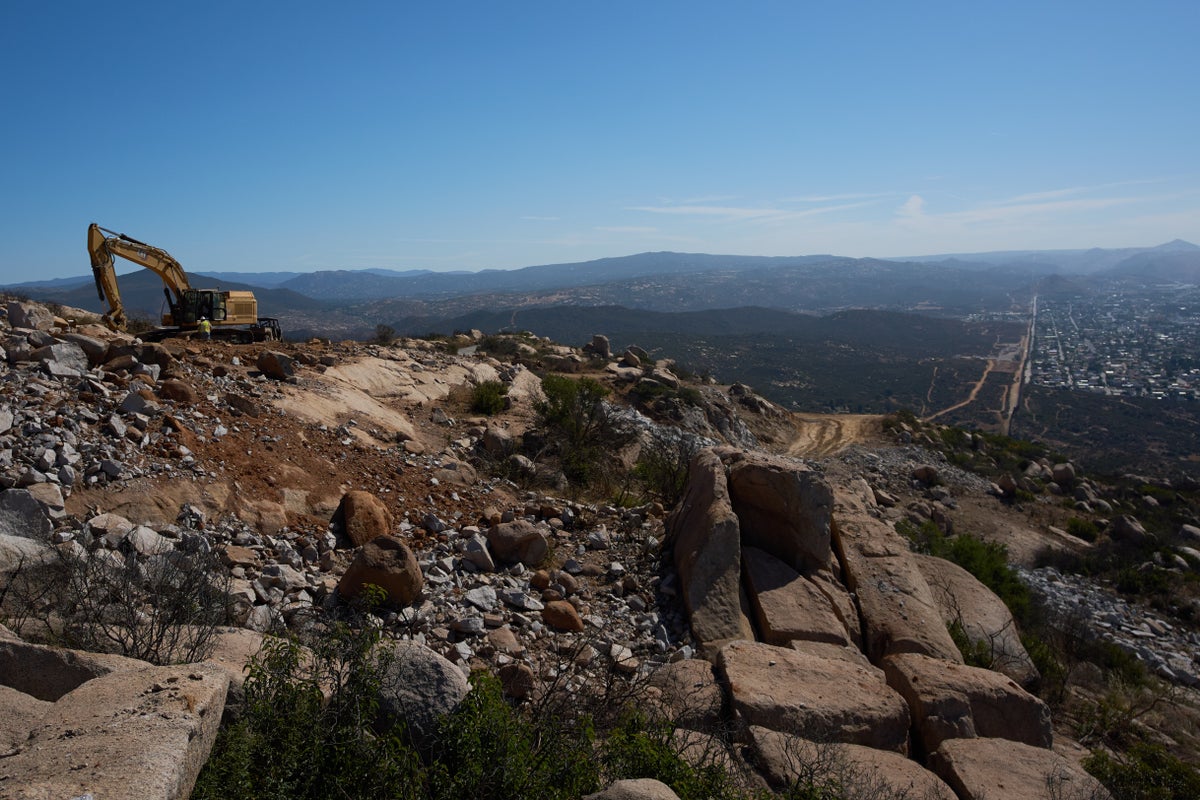
WASHINGTON — Indigenous leaders are sounding the alarm as U.S. border wall construction continues to carve through ancestral lands, destroying irreplaceable cultural sites in California and Arizona. Tribal officials report that federal contractors, operating under broad waivers of environmental and cultural protection laws, are causing irreversible damage to centuries-old artifacts and sacred landscapes.
For the Kumeyaay Nation, the impact is both spiritual and physical. At Kuuchamaa Mountain, a site straddling the international boundary that holds immense cultural significance, federal blasting and bulldozing have disturbed ground tribal leaders view as a living entity. The Department of Homeland Security (DHS) has invoked legal waivers to expedite construction projects, effectively bypassing oversight that would typically protect such sites from development.
“This is sacred to us like a church for you all. The mountain is our healer, our psychologist. Here is where we gather strength to live in this difficult world.”— Norma Meza Calles, Kumeyaay Nation tribal leader
The damage is not isolated to California. In Arizona, contractors recently carved through “Las Playas Intaglio,” a rare, 1,000-year-old fish-shaped geoglyph located in the Cabeza Prieta National Wildlife Refuge. Tribal experts have drawn comparisons between the site and the Nazca Lines of Peru due to its historical rarity. The Tohono O’odham Nation maintains they provided clear directives to contractors to avoid the sensitive area, leaving many to wonder how the destruction occurred despite the guidance.
“This was a devastating and entirely avoidable loss. There is nothing more important than our history, which is what makes us who we are as O’odham. The site was also an irreplaceable piece of the United States’ history, one none of us can ever get back.”— Verlon Jose, Tohono O’odham Chairman
U.S. Customs and Border Protection (CBP) issued a statement characterizing the destruction at the Arizona geoglyph as an “inadvertent” error. Commissioner Rodney Scott has initiated dialogues with tribal leaders to discuss potential mitigation efforts for the remaining portions of the site. However, the recent destruction has prompted tribal coalitions to escalate their response, with leaders meeting with federal officials to argue for more robust oversight and, according to recent reports, exploring the possibility of formal legal action to halt construction in sensitive areas.
The expansion efforts arrive at an ironic juncture, as data shows illegal border crossings have reached historic lows. Critics argue that the current pace of construction—and the resulting encroachment on Indigenous sovereignty—lacks a sufficient security justification. Indigenous activists emphasize that the loss of these lands is a violation of their heritage that cannot be compensated or restored once the dynamite has cleared. As the wall moves forward, the tension between aggressive infrastructure goals and the preservation of Native American history continues to sharpen, with tribal groups signaling that they remain prepared to challenge the administration’s actions in both the courtroom and the political arena.


